 2026-27 Admissions Open – Enrol Your Child Today!
Why STEM Labs Matter in Shaping Future-Ready K-12 Learners
Classrooms today are no longer limited to textbooks and blackboards. As the world becomes more technology-driven, schools must prepare students not just to score well in exams, but to think logically, solve problems, and adapt to change. This is where STEM labs play a powerful role in K-12 education.
STEM labs bring together Science, Technology, Engineering, and Mathematics in a hands-on learning environment. They help students understand how concepts work in real life-making learning meaningful, engaging, and future-focused.
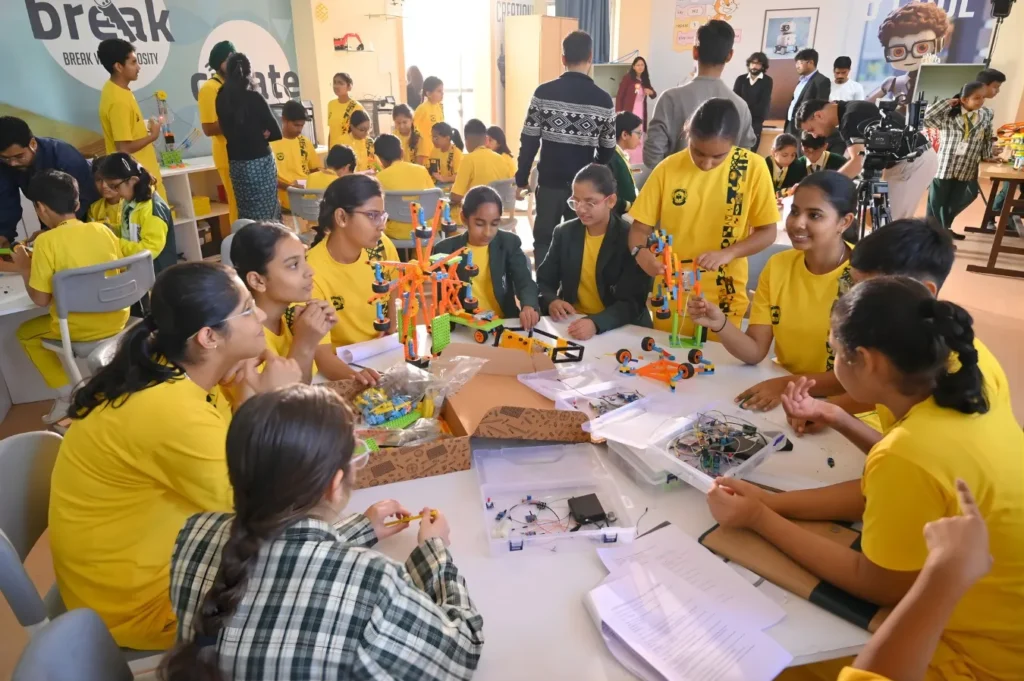
Table of Contents
What Is a STEM Lab in K-12 School Education?
A STEM lab in a K-12 school is a dedicated learning space where students explore Science, Technology, Engineering, and Mathematics through hands-on activities rather than only textbooks. It is designed to help children understand concepts by doing, experimenting, building, and observing, making learning more meaningful and engaging.
In a STEM lab, students work on practical tasks such as experiments, model-making, basic coding, problem-solving activities, and project-based learning. These experiences allow them to connect classroom concepts with real-world applications, helping ideas stay with them longer.
Unlike traditional classrooms, STEM labs encourage students to ask questions, test ideas, work in teams, and learn from mistakes. This approach supports both academic understanding and essential life skills such as logical thinking, creativity, collaboration, and confidence.
For K-12 learners, STEM labs play an important role in building curiosity from an early age and gradually preparing students for advanced learning, competitive exams, and future career paths.
Understanding STEM Learning in Schools
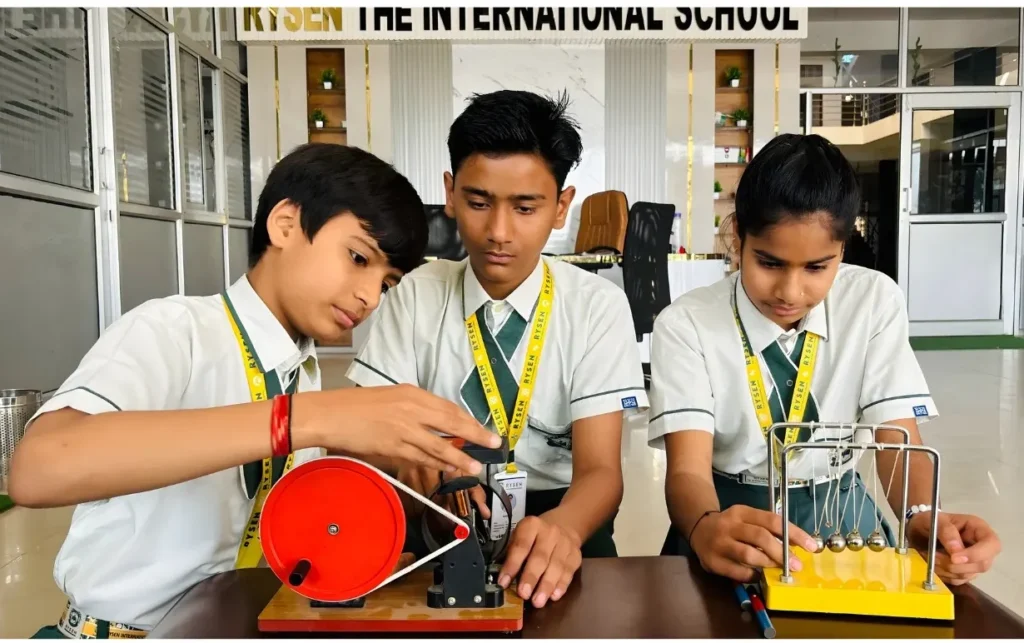
STEM education is not about teaching four subjects in isolation. Instead, it focuses on connecting concepts across disciplines and applying them to real-world problems. In a STEM lab, students move beyond reading theories and actively engage in experimenting, building models, testing ideas, and learning through practice.
This integrated approach supports both academic understanding and skill development. Students learn to think critically, collaborate effectively, and apply knowledge in practical ways, making STEM labs a valuable part of K-12 school education.
How STEM Labs Improve Concept Clarity
One of the biggest challenges students face is understanding abstract concepts. STEM labs help bridge this gap by allowing students to experience learning firsthand. Physics concepts become clearer through experiments, mathematics becomes more relatable through measurement and design tasks, and scientific principles are understood through observation and testing.
When students can see, touch, and experiment with what they are learning, concepts become clearer and less intimidating. This hands-on exposure reduces fear around complex subjects and builds stronger academic confidence.
Encouraging Problem-Solving and Critical Thinking
STEM labs naturally promote problem-solving and critical thinking skills. Students are guided to identify problems, test different solutions, analyse outcomes, and refine their approach. Mistakes are treated as part of the learning process rather than failures. This mindset builds resilience, patience, and confidence-qualities that are essential not only for academic success but also for everyday life.
Building Curiosity and Creativity from an Early Age
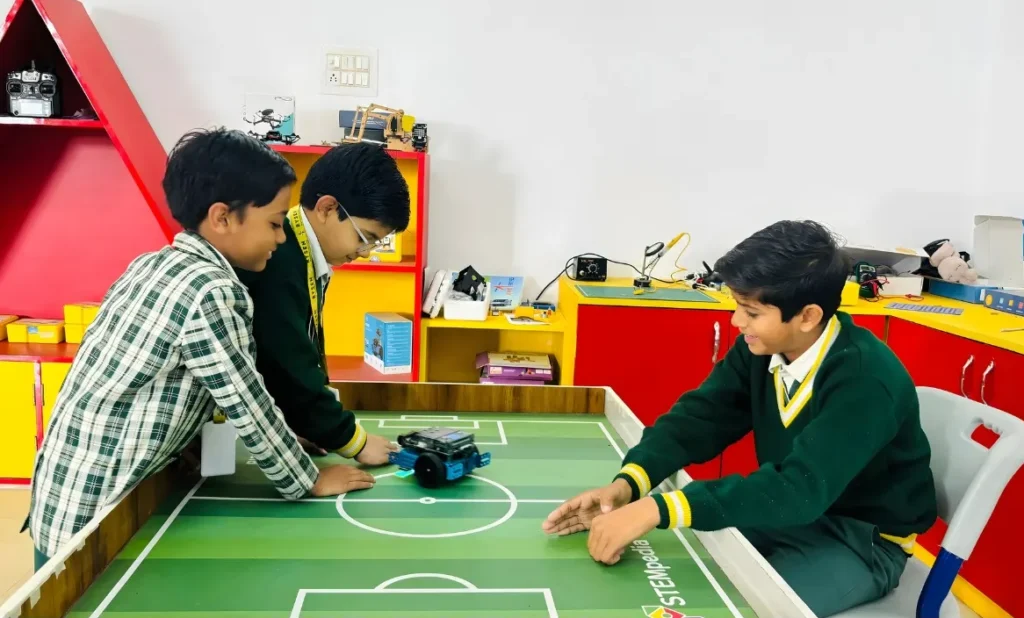
STEM labs are not limited to senior classes. When introduced at an early age, they help younger learners develop curiosity, creativity, and the confidence to explore new ideas. Simple experiments, model-making, and basic coding activities allow children to enjoy learning while strengthening essential cognitive skills. Early exposure to STEM learning encourages children to ask questions, think creatively, and develop a natural interest in how things work.
Preparing Students for a Changing Future
Future careers will require skills that go beyond textbook knowledge. STEM labs help students develop logical and analytical thinking, technological awareness, teamwork, and adaptability to new tools and ideas.
These skills prepare students for higher education, competitive exams, and a wide range of future career paths-whether in science, technology, business, or creative fields.
STEM Labs and Holistic Skill Development
STEM learning supports more than academics alone. It also strengthens communication skills through discussions and presentations, collaboration through group projects, and leadership through planning and execution. By working together in STEM labs, students learn to listen, contribute, and respect different perspectives-important life skills that are often overlooked in traditional learning setups.
The Teacher’s Role in Effective STEM Learning
STEM labs are most effective when guided by trained and supportive teachers. In these environments, teachers act as facilitators rather than lecturers. They encourage inquiry, guide students instead of providing ready-made answers, and offer feedback that supports improvement. This mentorship-based approach builds trust and allows students to learn confidently and independently.
Creating a Safe Environment for Exploration
A successful STEM lab is one where students feel safe to ask questions, try new approaches, and make mistakes. When schools create a supportive and respectful learning environment, students become more willing to take initiative and think independently. Such an atmosphere is essential for meaningful exploration and innovation.
Why STEM Labs Are Essential in K-12 Education Today
STEM labs align closely with modern education goals that focus on experiential learning, skill-based education, and future readiness. They help schools move beyond rote learning and support a more balanced, practical, and meaningful education system.
Learning That Prepares Students for Life
STEM labs are not just an add-on to school infrastructure-they are a vital part of preparing students for the real world. By encouraging curiosity, problem-solving, collaboration, and creativity, STEM labs help students grow into confident and capable learners.
When integrated thoughtfully into K-12 education, STEM labs ensure that students are not only academically strong, but also ready to face future challenges with confidence and clarity.
Share this article