 2026-27 Admissions Open – Enrol Your Child Today!
How to Understand Your Child’s Strengths: A Complete Guide for Parents
Every child is unique. Some children express themselves confidently, others think deeply before speaking. Some love numbers and patterns, while others are drawn to stories, art, or problem-solving. Yet, many parents struggle with one important question: How do I truly understand my child’s strengths?
Identifying a child’s strengths early helps parents guide learning, build confidence, and support long-term growth. This guide offers practical, thoughtful ways for parents to recognise their child’s natural abilities-without comparison, pressure, or labels.
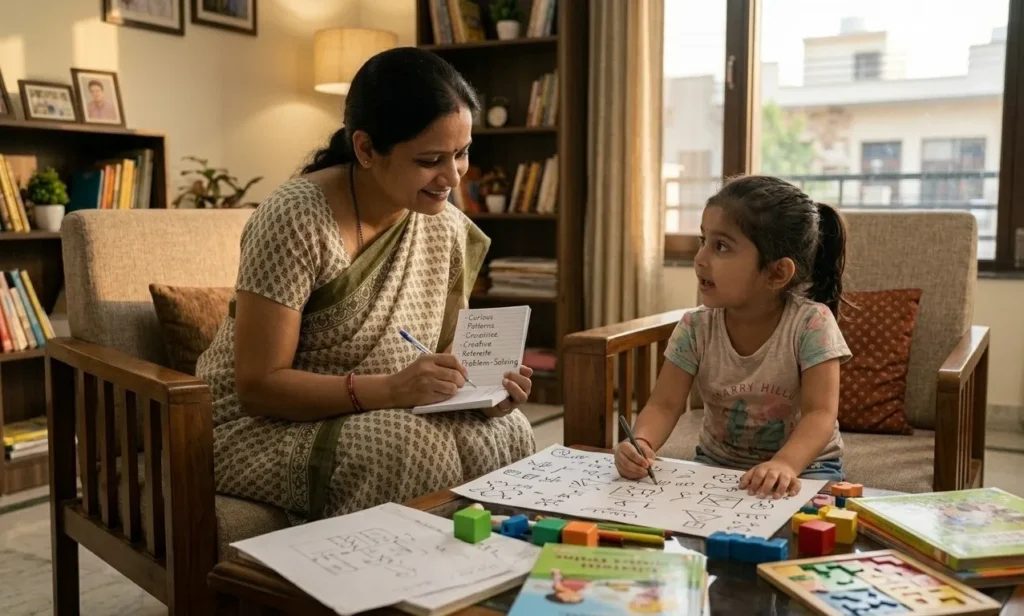
Table of Contents
Why Identifying Your Child’s Strengths Matters
A child’s strengths are not limited to academic performance. Strengths show up in how children think, interact, explore, and respond to challenges. When parents recognise and nurture these abilities, children feel understood and supported.
Children whose strengths are acknowledged often:
- Develop stronger self-confidence
- Feel motivated to learn and explore
- Handle challenges with greater resilience
- Build a positive relationship with learning
Understanding strengths is not about deciding a child’s career early. It is about helping them grow with clarity, confidence, and self-belief.
Strengths Go Beyond Marks and Grades
It is easy to focus on report cards, but marks only reflect a small part of a child’s potential. Many strengths are visible in everyday behaviour.
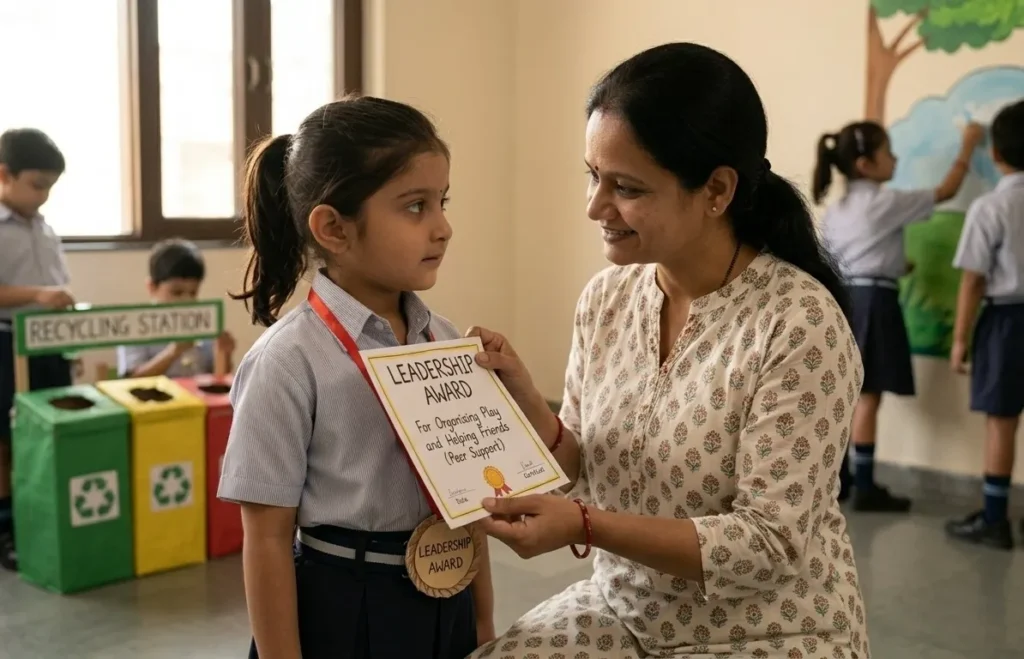
For example, a child who asks thoughtful questions may have strong analytical thinking. A child who enjoys organising games or helping peers may show leadership skills. Another child who expresses emotions clearly may have high emotional intelligence.
Recognising these qualities requires observation, patience, and openness-not comparison with others.
Observe Your Child in Different Situations
One of the most effective ways to identify strengths is simple observation. Children often reveal their natural abilities when they are relaxed and engaged.
Notice how your child behaves:
- During playtime and free activities
- While solving problems or puzzles
- In group settings with friends or siblings
- When facing challenges or mistakes
Over time, patterns begin to emerge. These patterns often point to genuine interests and abilities.
Listen to What Your Child Enjoys
Children naturally gravitate towards activities that align with their strengths. Paying attention to what excites them can be very revealing.
Ask gentle questions such as:
- “What was the best part of your day?”
- “Which subject do you enjoy the most?”
- “What activity makes you feel happy or confident?”
When children talk freely about what they enjoy, they offer valuable clues about where their strengths lie.
Notice How Your Child Learns Best
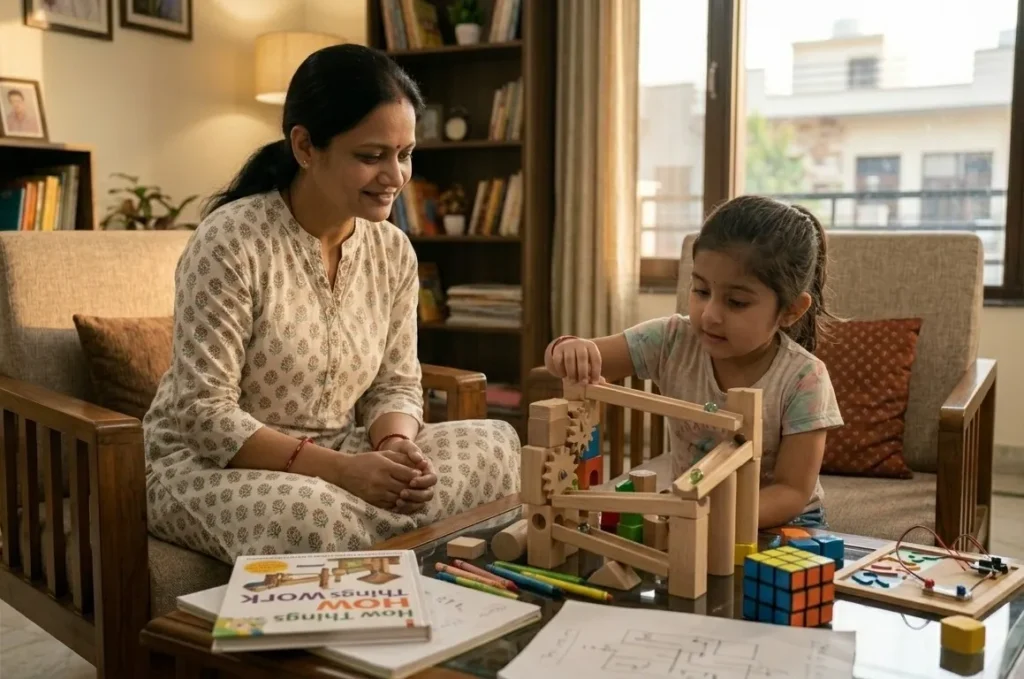
Every child learns differently. Some learn by reading and listening, others by doing and experimenting, and some through discussion and collaboration.
Understanding your child’s learning style helps you recognise strengths such as:
- Logical and analytical thinking
- Creativity and imagination
- Communication and expression
- Practical problem-solving
When learning feels natural rather than forced, strengths tend to shine through.
Encourage Exploration Without Pressure
Children discover strengths by trying different experiences. Exposure to a variety of activities allows them to understand what they enjoy and where they feel confident.
Encourage participation in:
- Sports, arts, or music
- Reading, storytelling, or writing
- Science experiments or building activities
- Group discussions and teamwork
The goal is exploration, not perfection. Children should feel free to try, change, and grow without fear of failure.
Use Feedback from Teachers and Mentors
Teachers observe children in structured learning environments and often notice abilities parents may not see at home. Regular conversations with teachers can provide valuable insights into a child’s strengths, learning patterns, and areas of interest.
When parents and educators work together, children receive consistent support that builds confidence and clarity.
Avoid Comparison and Fixed Labels
One of the biggest obstacles to recognising strengths is comparison. Every child develops at their own pace. Comparing siblings or peers can make children doubt themselves and hide their natural abilities.
Similarly, avoid fixed labels such as “weak in studies” or “only good at sports.” Strengths evolve over time, and children need space to grow without being boxed into expectations.
Help Your Child Build Confidence Around Their Strengths
Once strengths are identified, the next step is nurturing them with encouragement and realistic expectations. Praise effort, curiosity, and improvement rather than only results.
Simple support like listening, showing interest, and celebrating small achievements goes a long way in helping children believe in themselves.
How Identifying Strengths Supports Future Growth
Children who understand their strengths tend to:
- Make better academic and activity choices
- Feel more confident in new situations
- Develop independence and responsibility
- Approach challenges with a positive mindset
This self-awareness becomes a strong foundation for future learning, decision-making, and emotional well-being.
Every Child Has Strengths Waiting to Be Seen
Identifying your child’s strengths is not a one-time task-it is an ongoing journey. With observation, patience, and open communication, parents can help children recognise what they are naturally good at.
When children feel seen for who they are-not compared or pressured-they grow into confident, capable individuals who enjoy learning and trust their own abilities.
Supporting a child’s strengths today helps shape a confident, balanced future tomorrow.
Share this article