 2026-27 Admissions Open – Enrol Your Child Today!
How Schools Use Digital Tools in Classroom Learning
Education is evolving rapidly. Today’s classrooms are no longer limited to textbooks, notebooks, and chalkboards. Schools are increasingly using technology to make learning more engaging, interactive, and meaningful.
For many parents, however, the question is not whether schools should use technology, but how they use it. Parents want to know if digital tools improve learning, whether screen time is managed responsibly, and how technology prepares children for the future. This is where thoughtful technology in education makes a difference. When used with clear learning goals and strong teacher guidance, digital tools can enhance understanding, encourage participation, and support student growth.
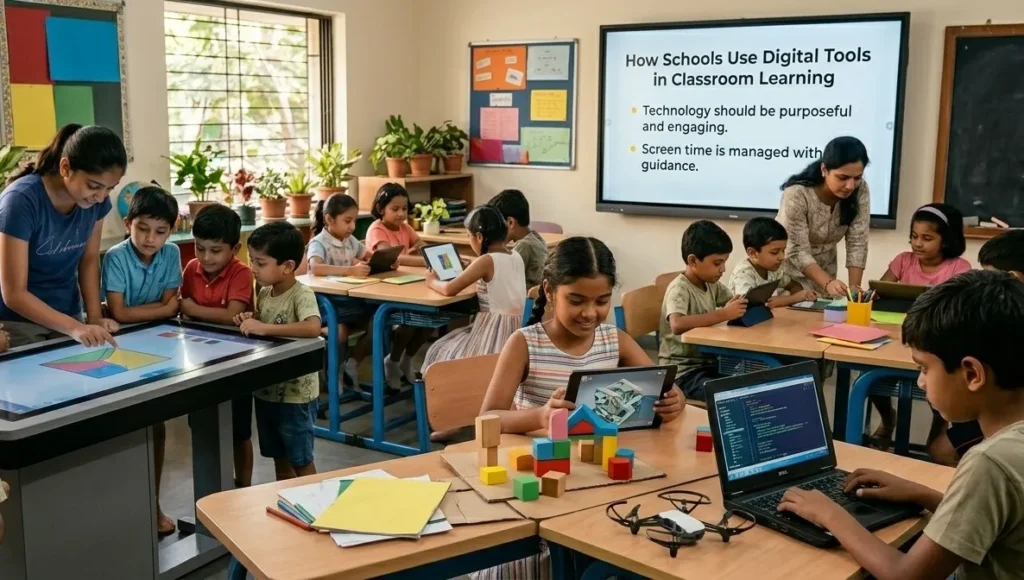
Table of Contents
Why Technology Matters in Today's Classrooms
Students today grow up in a digital world. They interact with technology every day, which means they often respond well to visual and interactive learning experiences.
The use of classroom technology helps teachers explain concepts in more engaging ways. It also encourages participation, collaboration, and problem-solving. Instead of simply memorising information, students can explore ideas, ask questions, and connect learning to real-life situations. As a result, technology supports deeper understanding while keeping students actively involved in the learning process.

A Balanced Approach to Digital Learning in Schools
Effective digital learning in schools is about balance. Technology should support teaching, not replace it.
Teachers continue to play the central role in the classroom. They guide discussions, answer questions, provide feedback, and help students build confidence. Digital tools simply give teachers additional ways to explain concepts and personalise learning.
This balanced approach ensures that students benefit from modern learning methods while continuing to develop communication, social, and critical-thinking skills.
Common Digital Tools Used in Classroom Learning
Schools use a variety of digital tools for students to make lessons more engaging and effective. Each tool serves a specific purpose and helps students understand concepts in different ways.
Smart Boards
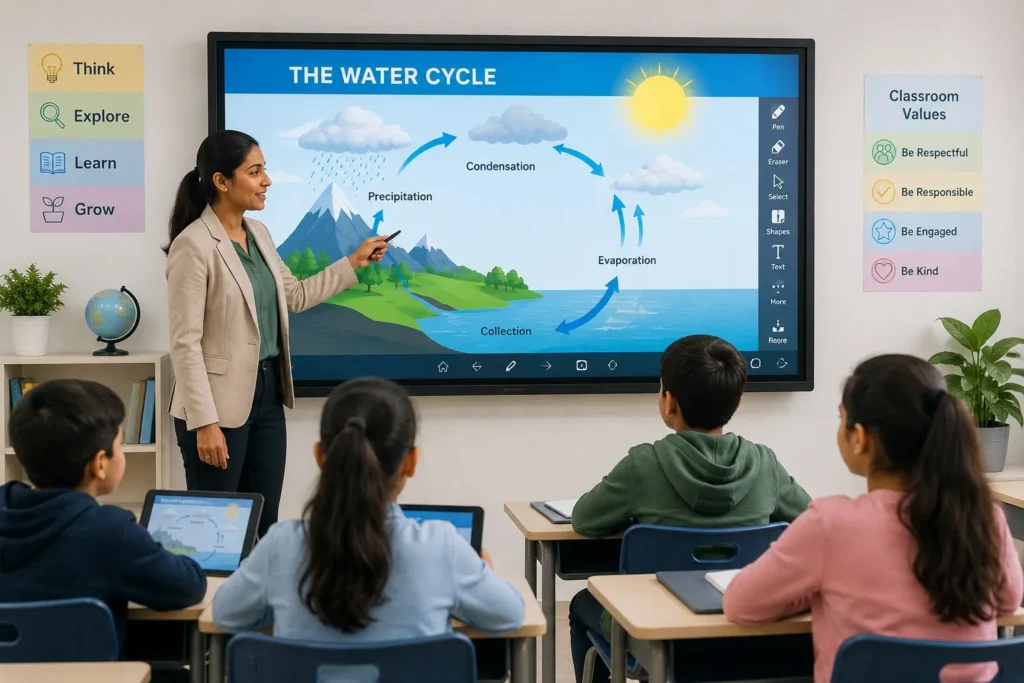
Smart boards are one of the most widely used digital tools in classrooms. Teachers use them to display diagrams, presentations, animations, and interactive activities.
For example, during a science lesson, students can watch an animation showing how the human heart pumps blood through the body. Seeing the process visually often makes it easier to understand than reading about it in a textbook alone.
This interactive approach improves concept clarity and encourages greater classroom participation.
Educational Videos
Educational videos help bring lessons to life. Whether students are learning about the solar system, historical events, or environmental changes, videos provide visual context that strengthens understanding.
For instance, while studying volcanoes, students can watch real footage of volcanic eruptions and understand how geological processes work in the real world. This makes learning more engaging and memorable.
Learning Apps and Digital Practice Platforms
Many schools use learning apps to support revision and independent practice. These platforms offer quizzes, worksheets, and interactive exercises that reinforce classroom learning.
Students can revisit difficult topics, practise at their own pace, and gain confidence through regular reinforcement. Teachers can also use the results to identify areas where students may need additional support.
Digital Simulations and Virtual Experiments
Some concepts are best understood through practical experiences. Digital simulations allow students to explore scientific processes and conduct virtual experiments that may not be possible in a traditional classroom setting.
For example, students can observe chemical reactions, explore the solar system, or investigate environmental changes through interactive simulations. These experiences make abstract concepts easier to understand and encourage curiosity.
Presentation and Research Tools
Technology also helps students create presentations, complete projects, and conduct research. These tools encourage students to organise information, communicate ideas clearly, and collaborate with classmates.
As students work on assignments and presentations, they build confidence, creativity, and communication skills that extend beyond academics.
AI-Powered Learning Tools
The growing role of AI in school education is creating new opportunities for personalised learning. AI-powered platforms can recommend practice activities, identify learning gaps, and provide additional support based on a student’s progress.
When used responsibly and under teacher supervision, these tools help students learn more effectively while keeping learning personalised and engaging. AI can also help teachers track student progress, identify learning gaps, and provide timely academic support.
How Smart Classrooms Improve Concept Clarity
The rise of smart classrooms in schools has transformed the way lessons are delivered. Interactive screens, multimedia resources, and digital teaching tools allow teachers to explain complex topics more clearly.
This is especially valuable in subjects such as Science and Mathematics, where visual demonstrations often improve understanding. By combining traditional teaching with digital resources, schools create more engaging learning experiences that help students grasp concepts faster. Parents interested in learning more about classroom infrastructure can explore the school’s Facilities page.
Digital Tools for Students Across Different Subjects
Technology supports learning across a wide range of subjects.
In Science, students use simulations and visual demonstrations to understand complex concepts. In Mathematics, teachers use interactive tools to explain problem-solving methods step by step. Language learning is enhanced through reading platforms, listening activities, and collaborative exercises. This thoughtful integration of digital tools for students helps make learning more engaging and accessible across the curriculum.
How Digital Learning Supports Foundational Learning
Strong reading, writing, and numeracy skills form the foundation of a child’s education. Today, schools are using digital tools to strengthen these essential skills from an early age.
Interactive reading activities, phonics-based learning programs, and visual mathematics tools help students practise concepts in engaging ways. Teachers can also identify learning gaps more quickly and provide targeted support.
When combined with classroom teaching, digital learning helps students build stronger foundations and develop confidence as they progress through higher grades.
Supporting Experiential Learning Through Technology
Technology becomes even more effective when combined with hands-on learning experiences.
Through projects, simulations, research activities, and collaborative assignments, students apply classroom concepts to practical situations. This strengthens understanding and encourages independent thinking.
These experiences support experiential learning, helping students learn through exploration, observation, and application. Parents can learn more about this approach by visiting the school’s Academics page.
How Technology Supports Different Learning Styles
Every child learns differently. Some students learn best through visual content, while others prefer listening, discussion, or practical activities.
Technology allows teachers to present information in multiple ways. Visual learners benefit from animations and diagrams, while auditory learners engage through videos and guided explanations. Interactive activities also help hands-on learners understand concepts more effectively.
As a result, technology helps create a more inclusive learning environment for all students.
How Technology Makes Learning More Inclusive
Every student deserves access to quality learning opportunities. Technology helps schools create more inclusive classrooms by offering different ways for students to learn and participate.
Visual content, audio resources, interactive activities, and adaptive learning platforms can support students with different abilities and learning preferences.
By making learning resources more accessible, technology helps create a classroom environment where every student can participate with confidence.
Building Digital Literacy and Future-Ready Skills
Beyond academics, schools play an important role in developing digital literacy for students.
Students need to learn how to use technology responsibly, evaluate information critically, and communicate effectively in digital environments. These skills are essential for higher education, future careers, and everyday life.
Technology also helps students develop creativity, collaboration, problem-solving abilities, and adaptability. Together, these skills prepare students for an increasingly digital future.
Technology and Student Development Programs
Technology contributes to broader student development programs by supporting leadership, teamwork, creativity, and communication.
Whether students are creating presentations, conducting research, or working on group projects, they gain valuable experiences that help build confidence and independence.
These opportunities complement academic learning and contribute to well-rounded personal development.

Maintaining a Healthy Balance Between Technology and Traditional Learning
While technology offers many advantages, balance remains essential. Effective schools use technology with a clear purpose. Screen time is structured, age-appropriate, and guided by teachers. Classroom discussions, written work, practical activities, and face-to-face interaction continue to play an important role in learning.
This balanced approach ensures that technology enhances education without replacing the human connections that make learning meaningful.
The Role of Teachers in Digital Learning
While technology provides new learning opportunities, teachers remain the most important part of the classroom experience.
Teachers decide how and when digital tools should be used, guide classroom discussions, and help students connect digital content with real-world understanding.
The most effective learning environments combine strong teaching with thoughtful use of technology. Digital tools support learning, but teachers continue to inspire, mentor, and guide students every day.
How Digital Learning Prepares Students for Future Success
As students move into higher education and future careers, digital skills become increasingly important.
Through structured and purposeful use of technology, students develop research skills, communication abilities, critical thinking, and confidence in using digital tools. They also become more comfortable adapting to new technologies and learning environments.
These experiences help students become responsible, capable, and future-ready learners. In addition to digital skills, students also develop collaboration, creativity, communication, and problem-solving abilities. These competencies are increasingly important in higher education and future careers.
What Parents Should Look for in a School's Digital Learning Approach
When evaluating schools during the admissions process, parents should look beyond the presence of technology alone.
Consider whether the school:
- Uses technology to improve learning outcomes
- Maintains a teacher-led classroom environment
- Provides access to smart classrooms and digital resources
- Focuses on digital literacy and future-ready skills
- Balances screen time with traditional learning methods
- Integrates technology into academic and co-curricular activities
Parents can also explore the school’s Admissions page, Facilities page, Academics page, and Student Development Programs to better understand how technology supports student growth.
Final Thoughts
The goal of technology in education is not to replace teachers. Instead, it is to make learning more engaging, interactive, and effective.
From smart boards and educational videos to digital simulations and AI in school education, schools are using technology to improve learning outcomes and support student success. When implemented thoughtfully, digital learning in schools helps students build knowledge, confidence, and the future-ready skills they need to thrive in an ever-changing world.
Share this article