 2026-27 Admissions Open – Enrol Your Child Today!
What Is Activity-Based Learning and Why Is It Important for Students?
Today’s students need more than good grades. They need creativity, confidence, communication skills, and the ability to solve real-world problems. This is why many schools are moving toward modern teaching methods that focus on active participation rather than passive listening.
One such approach is Activity-Based Learning (ABL). Instead of memorizing facts from textbooks, students learn through hands-on experiences, group discussions, projects, experiments, games, and practical activities. This approach makes learning meaningful, enjoyable, and easier to remember.
In this blog, you’ll learn what Activity-Based Learning is, why it is important, its major benefits for students, and how parents can support this learning approach at home.
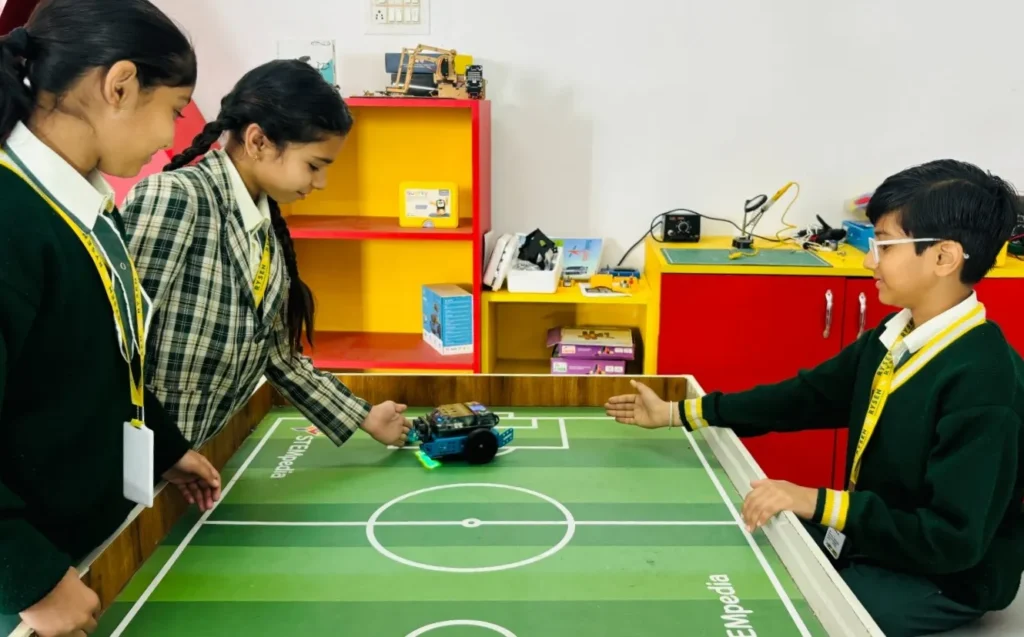
Table of Contents

What Is Activity-Based Learning?
Activity-Based Learning is a student-centered teaching approach where children learn by actively participating in activities instead of only listening to classroom lectures. It encourages students to explore, experiment, observe, discuss, and apply concepts in real-life situations.
Unlike traditional teaching methods that mainly focus on memorization, Activity-Based Learning helps students understand concepts through experience. Whether it is conducting a science experiment, solving a real-life math problem, participating in role-play, creating art, or working on a group assignment, every activity becomes an opportunity to learn.
This method is closely connected with Experiential Learning, where students gain knowledge through direct experience and reflection. It also supports Project-Based Learning, allowing children to investigate meaningful questions and create solutions while developing essential life skills.
Common Activity-Based Learning Examples
Some popular Activity-Based Learning examples include:










These classroom activities make education engaging while promoting curiosity and independent thinking.
Why Is Activity-Based Learning Important for Students?
Education today is not just about completing a syllabus. Students need skills that prepare them for school, higher education, and future careers. Activity-Based Learning in the classroom helps children become active learners who understand concepts instead of simply memorizing them.
Here are the key reasons why this teaching approach is important.
1. Boosts Student Engagement
Students learn better when they participate actively. Hands-on activities naturally increase curiosity and motivation because children enjoy discovering new ideas through experience. Interactive lessons reduce boredom and encourage students to ask questions, explore solutions, and participate confidently in classroom discussions. As a result, students stay focused for longer periods and enjoy the learning process.
2. Encourages Critical Thinking and Problem-Solving
One of the biggest advantages of Activity-Based Learning is that it develops strong problem-solving skills. Instead of giving students ready-made answers, teachers encourage them to observe, analyse situations, test different ideas, and find their own solutions. These problem-solving experiences improve logical thinking while preparing students for real-life challenges both inside and outside the classroom.
3. Fosters Collaboration and Teamwork
Many classroom activities involve working in pairs or groups. Students learn to communicate, share ideas, respect different opinions, and achieve common goals together. Collaborative learning builds leadership, empathy, responsibility, and effective communication skills that are valuable throughout life. Team-based projects also teach students how to solve disagreements respectfully and work toward shared success.
4. Caters to Different Learning Styles
Every child learns differently. Some children understand concepts better through visuals, while others learn through listening, movement, or hands-on experiences. Activity-Based Learning gives every student an opportunity to learn in the way that suits them best. Whether students enjoy experiments, storytelling, creative arts, technology, or practical tasks, this teaching approach supports multiple learning styles and creates an inclusive classroom environment.
5. Builds Confidence and Independence
When students complete activities independently, they gain confidence in their own abilities. Instead of depending entirely on teachers, children learn to research information, make decisions, solve challenges, and evaluate their own work. This independence helps students become responsible learners who take ownership of their education.
6. Makes Learning Relevant and Practical
One of the greatest strengths of Practical learning is that students can connect classroom lessons with everyday life. Instead of learning only from books, children apply concepts through experiments, projects, field visits, simulations, and real-world activities. This focus on Learning beyond textbooks helps students understand not only what they are learning but also why it matters. Students begin to see the practical value of education in solving everyday problems.
7. Enhances Retention and Understanding
Research consistently shows that students remember concepts better when they actively participate in learning. Reading alone may help students memorize information temporarily. However, performing activities allows them to understand concepts deeply and retain knowledge for longer periods. This combination of experience and reflection strengthens academic performance while making learning more meaningful.
Benefits of Activity-Based Learning
The major Benefits of Activity-Based Learning include:
- Higher student engagement
- Better academic understanding
- Stronger problem-solving skills
- Increased creativity
- Improved teamwork and communication
- Greater confidence
- Better knowledge retention
- More meaningful Experiential Learning
- Strong support for Project-Based Learning
- Encouragement of Holistic development
These benefits prepare students not only for examinations but also for lifelong success.
How Parents Can Support Activity-Based Learning
Parents play a vital role in extending learning beyond the classroom. Here are some simple ways to encourage Activity-Based Learning at home.
Encourage Everyday Learning
Cooking, gardening, shopping, and travelling can become valuable learning experiences. Ask children questions and encourage them to think independently.
Promote Reading and Exploration
Books, educational videos, museums, science centers, and nature walks inspire curiosity and make learning enjoyable.
Choose Creative Projects
Invite children to build models, create artwork, write stories, or conduct simple science experiments. These activities strengthen creativity and practical understanding.
Support School Projects
Help your child plan projects without doing the work for them. Encourage them to research, organize ideas, and present their findings confidently.
Ask Open-Ended Questions
Instead of asking questions with one-word answers, ask:
- Why do you think this happened?
- How would you solve this problem?
- What could you do differently next time?
These conversations improve thinking skills and confidence.
Celebrate Effort
Focus on your child’s learning journey rather than only the final result. Appreciating effort encourages curiosity and continuous improvement.
Understanding what Activity-Based Learning is helps parents recognize why it has become one of the most effective modern teaching methods in today’s education system.
By encouraging participation, creativity, collaboration, and Practical learning, Activity-Based Learning transforms classrooms into exciting spaces where students actively explore new ideas. It develops problem-solving skills, supports Experiential Learning, strengthens Project-Based Learning, and promotes the Holistic development of every child.
Most importantly, it encourages learning beyond textbooks, helping students connect classroom knowledge with real-life situations. When schools and parents work together to support this approach, children become confident, curious, and lifelong learners who are prepared for future challenges.
Share this article
Frequently Asked QUESTIONS
Q1. What is Activity-Based Learning?
Activity-Based Learning is a teaching method where students learn through hands-on activities, experiments, discussions, projects, and real-life experiences instead of only listening to lectures.
Q2. What are the benefits of Activity-Based Learning?
The benefits include improved student engagement, stronger problem-solving skills, better teamwork, higher confidence, deeper understanding, and better knowledge retention.
Q3. How is Activity-Based Learning different from traditional learning?
Traditional learning often focuses on memorization, while Activity-Based Learning encourages students to actively participate, explore concepts, and apply knowledge in practical situations.
Q4. What are some Activity-Based Learning examples?
Examples include science experiments, storytelling, educational games, role-play, group discussions, art and craft, STEM activities, field visits, and project-based assignments.
Q5. How can parents support Activity-Based Learning at home?
Parents can encourage practical activities, ask open-ended questions, involve children in everyday learning experiences, support school projects, and create opportunities for exploration and creativity.